Skip to content

Wilkes University

Megan K. Youmans

Associate Professor, Department of Chemistry and Biochemistry

Hello.

I am an Associate Professor of Chemistry at Wilkes University. In addition to teaching, I serve on the Faculty Development Committee, advise the American Chemical Society Student Chapter (Chem Club), and oversee an active research laboratory. In my time away from campus, I enjoy figure skating, baking, traveling, and playing with my daughters.

I have a background in both inorganic and medicinal chemistry. As such, I am interested in exploring the interface between inorganic chemistry and biology. My research program uses metal complexes as biomimetic models of metalloenzymes in an attempt to better understand the chemical and physical properties of enzymes such as sulfite oxidase and carbon monoxide dehydrogenase. Research in my lab combines airfree organic synthesis, catalysis, and electrochemistry.

My primary teaching responsibilities include general and inorganic chemistry. I enjoy the breadth of topics covered in both classes as it allows me to emphasize the necessity of chemistry to a range of disciplines be it medicine, geology, or environmental sciences. I also enjoy inventing (for better or worse) new pedagogical techniques aimed at increasing student participation and helping students transition into college. My objective in both courses is to teach students to problem solve creatively through the combination of multiple concepts, to think critically about their world and to apply chemical concepts to their area of study.

Education.

  1. 2014 — 2015

    Postdoctoral Associate

    Boston University, Boston, Massachusetts

    • Dinuclear Cobalt Complexes for Water Oxidation and Reduction
    • An Oxygen-Donating Scorpionate Ligand System
  2. 2009 — 2014

    Ph.D. Medicinal Chemistry

    University of Utah, Salt Lake City, Utah

    Thesis: Novel Probes for the Detection of Hydrogen Sulfide and their Biological and Industrial Applications

  3. 2004 — 2008

    B.S. Chemistry, honors

    University of Southern California, Los Angeles, California

    • Spectroscopic Investigations of Gold-Mediated Disulfide Exchange
    • Towards a General Hydride Abstraction Catalyst: Mechanistic Studies of C–H Oxidation with Cyclopentadienone-Ligated Metal Carbonyls
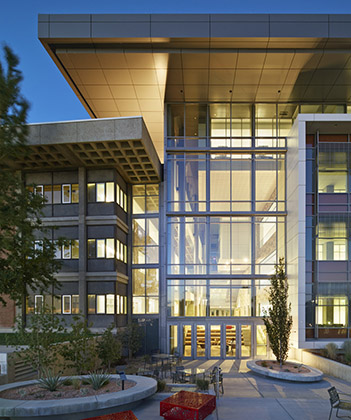
Skaggs Hall, University of Utah

Research.

Current Research

Research interests in the Youmans group lie at the interface of inorganic chemistry and biology. Specifically, we are interested in the electronic structure and mechanistic details of metalloenzymes critical to human health.

Molybdenum-containing enzymes catalyze essential redox reactions in nearly all forms of life. Yet the electronic properties governing the activity of these enzymes are poorly understood. While the extent of work in the field has focused on the pterin dithiolene ligand, the effect of the placeholder ligands on enzyme model systems has been neglected. We are currently synthesizing and characterizing a novel set of small molecule coordination complexes utilizing the hydrotris(imidazole) borate family of ligands as models for the sulfite oxidase family of molybdoenzymes. We hypothesize that these complexes will have reduction potentials more closely resembling that of sulfite oxidase.

Students

Research in the Youmans group is conducted exclusively by undergraduate Wilkes students and visiting high school students.

  • Kelly Megargel

    Wilkes ’22

  • Matthew Schwarztrauber

    Wilkes ’23

    Wilkes University Nesbitt School of Pharmacy Pharm.D. ’25

  • Shawnessey Koebel

    Wilkes ’23

  • Courtney Novak

    Wilkes ’23

  • Lauren Herman

    Dickinson College ’23

  • Mengying Shi

    Wilkes ’21

    Wilkes University Nesbitt School of Pharmacy Pharm.D. ’23

  • Michael Pettit

    Wilkes ’21

    Environmental Chemist/Technician at Resource Environmental Management

  • Max Mendrzycki

    Hanover Area HS ’19

    University of Delaware

  • Nicholas Fitzpatrick

    Wilkes ’19

    Doctoral student, Worcester Polytechnic Institute

  • Martina Barna

    Wilkes ’18

    Production Technician at Sanofi Pasteur Vaccines

  • Benjamin Sharp

    Wilkes ’18

  • Sarah Nichols

    Wilkes ’18

    Chemist at Avidea Technologies

Funding

Research in the Youmans group is supported by a number of internal grants at Wilkes University and the Wilkes University Department of Chemistry and Biochemistry. Funding allows for the purchasing of chemicals and equipment and for the compensation of student researchers each summer.

2021

Wilkes University Mentoring Project Fund Grant

Awarded $9,120.00

2018 — 2022

Wilkes University Research and Scholarship Grant

Biomimetic Complexes of Sulfite Oxidase Utilizing Soft Tripodal Ligand Systems

Awarded $29,856.00

2018

Wilkes University Mentoring Project Fund Grant

Awarded $4,191.00

2017

Wilkes University Faculty Development Committee — Type I Grant

Investigating the Effect of Non-Pterin Ligand Systems on Molybdoenzyme Mimetic Complexes

Awarded $3,551.73

2017

Wilkes University Mentoring Project Fund Grant

Awarded $9,158.60

It is my earnest desire that some of you should carry on this scientific work and keep for your ambition the determination to make a permanent contribution to science.
Marie Curie

Our Lab

In addition to the advanced instrumentation available at Wilkes University, the Youmans group has additional equipment designed to help us work with air- and moisture-sensitive compounds. These include a Schlenk line and glovebox.

Publications.

Going Remote: How Teaching During a Crisis is Unique to Other Distance Learning Experiences

Journal of Chemical Education, 2020

Concerns over the spread of COVID-19 closed many university campuses during the spring of 2020 and resulted in a shift to remote instruction. This communication argues that the rapid nature of the transition and the circumstances surrounding the pandemic made the experience distinct from traditional online learning. The challenges faced by general chemistry students at a small, private university during this period are described, and the implementation of trauma-informed teaching principles to create a supportive learning community and promote resilience are outlined.

Read the article →

Lanthanide Complexes as Luminogenic Probes to Measure Sulfide Levels in Industrial Samples

Analytica Chimica Acta, Volume 896, 2015

A series of lanthanide-based, azide-appended complexes were investigated as hydrogen sulfide-sensitive probes. Europium complex 1 and Tb complex 3 both displayed a sulfide-dependent increase in luminescence, while Tb complex 2 displayed a decrease in luminescence upon exposure to NaHS. Complex 3 provided a sensitive measure of sulfide levels in petrochemical water samples (detection limit ∼250 nM), while complex 1 was capable of monitoring μM levels of sulfide in partially refined crude oil.

Read the article →

Marine Natural Products as Inhibitors of Cystathionine Beta-Synthase Activity

Bioorganic & Medicinal Chemistry Letters, Volume 25, Issue 5, 2015

A library consisting of characterized marine natural products as well as synthetic derivatives was screened for compounds capable of inhibiting the production of hydrogen sulfide (H2S) by cystathionine beta-synthase (CBS). Eight hits were validated and shown to inhibit CBS activity with IC50 values ranging from 83 to 187 μM. In addition, a modified fluorogenic probe for H2S detection with improved solubility in aqueous solutions is reported.

Read the article →

Inhibition of the Lymphoid Tyrosine Phosphatase: The Effect of Zinc(II) Ions and Chelating Ligand Fragments on Enzymatic Activity

Bioorganic & Medicinal Chemistry Letters, Volume 24, Issue 16, 2014

A 96-member chelator fragment library (CFL-1.1) was screened to identify inhibitors of the lymphoid tyrosine phosphatase in the absence and presence of zinc acetate. Of these, 1,2-dihydroxynaphthalene was the most potent inhibitor with an IC50 value of 2.52 ± 0.06 μM after 2 h of incubation, indicating that the oxidized quinone species is likely the active inhibitor. The inhibition was time-dependent, consistent with covalent modification of the enzyme.

Read the article →

Identification of Cystathionine Beta-Synthase Inhibitors Using a Hydrogen Sulfide Selective Probe

Angewandte Chemie, International Edition, Volume 52, Issue 17, 2013

Buzzing with activity: A hydrogen sulfide selective fluorogenic probe, 7-azido-4-methylcoumarin (AzMC), serves as a highly sensitive assay for cystathionine β-synthase activity, and is suitable for the high-throughput discovery of novel enzyme inhibitors.

Read the article →

Catalytic Nitrene Transfer by a Zirconium(IV) Redox-Active Ligand Complex

Chemical Science, Issue 1, 2011

Nitrene transfer catalyzed by a d0 zirconium(IV) complex with a redox-active ligand is reported. Aryl azides reacted with 1a to afford zirconium imide dimers, while reaction of 1b with organoazides transferred the nitrene group to the isonitrile to form a carbodiimide. In the presence of excess organoazide and isonitrile, catalytic carbodiimide formation occurred, showing that a redox-active ligand and a d0 metal center can work in concert to effect nitrene group transfer reactivity.

Read the article →

Mechanism of Hydride Abstraction Catalysis by Cyclopentadienone-Ligated Carbonylmetal Complexes (M = Ru, Fe)

European Journal of Inorganic Chemistry, Issue 2, 2009

Cyclopentadienone-ligated ruthenium complexes, such as Shvo's catalyst, are known to reversibly oxidize alcohols to the corresponding carbonyl compounds. We find that an oxidant as weak as acetone can be used to re-oxidize the intermediate ruthenium hydride without catalyst re-oxidation becoming rate-limiting. Furthermore, C–H cleavage is a significantly electrophilic event, as demonstrated by a Hammett reaction parameter of ρ = −0.89.

Read the article →

Teaching.

Undergraduate Courses

CHM 111: Fundamentals of Chemistry Laboratory

Fundamentals of Chemistry is a one-semester course introducing students not majoring in science or engineering to chemistry. Topics include atomic structure, chemical bonding, gas laws, solution chemistry, and acid/base chemistry. An introduction to organic and biochemistry is also included.

CHM 113/115: Elements and Compounds Lecture and Laboratory

Chemistry 115 provides students with an introduction to the study of chemistry, focusing on atoms as the building blocks of matter and their combination into compounds. Topics include the structure and physical properties of atoms, periodicity, molecular bonding, stoichiometry, and thermodynamics. Chemistry 113 is the associated lab and introduces students to the fundamental techniques required for chemical research.

CHM 114/116: The Chemical Reaction Lecture and Laboratory

Chemistry 116 builds upon the chemical foundations obtained in Chemistry 115. Students continue to explore the science of matter on an atomic and molecular level through the detailed investigation of the phases of matter and chemical reactions. Topics include chemical equilibria, reaction kinetics, acid-base chemistry, and oxidation-reduction reactions. Chemistry 114 provides the accompanying laboratory.

CHM 322: Inorganic Chemistry Lecture

Inorganic Chemistry explores in more depth the chemistry of inorganic compounds and chemical bonding first explored in General Chemistry. Symmetry, group theory, and molecular orbital diagrams provide the basis for the study of coordination chemistry including ligand field theory and spectroscopic methods. Other topics include organometallic chemistry and bioinorganic chemistry.

CHM 323: Advanced Inorganic Chemistry Laboratory

Advanced Inorganic Chemistry Laboratory builds upon the concepts introduced in CHM 322. Emphasis is placed on the synthesis and characterization of transition metal- and lanthanide complexes. Catalysis and mechanisms are introduced, and students gain experience in the handling of air-sensitive materials.

University & Community Service

Chemistry Club Advisor

The Chem Club is a nationally-recognized student chapter of the American Chemical Society. In addition to numerous social activities such as bowling nights and trips to Robas Family Farm, the club participates in a number of science-themed outreach events. These include:

  • Women Empowered by Science (WEBS)
  • Adventures in Science
  • Art & Science Day at Chester Street Elementary
  • Health Science Discovery Day
  • Passport to Science
  • Kistler Kamp

Faculty Development Committee, Chair

As chair of FDC, I oversee internal sabbatical, research, and travel funding.